


 Nike
Nike
 Adidas
 Asics
Asics
 K-Swiss
 New Balance
 On
On
 Wilson
 Babolat
 Head
Head
 Nike
Nike
 Wilson
 K-Swiss
 Babolat
 Nike
Nike
 Asics
Asics
 K-Swiss
 New Balance
 On
On
 Wilson
 Babolat
 Head
Head
 Lacoste
 Tecnifibre
 Wilson
 Penguin
 Boss
Boss
 Diadora
 Lucky in Love
 Lacoste
 Sofibella
 Lija
Lija
 On
On
 Bubble
 Boast
Boast
 Girl's Lucky in Love
 Fila
Fila
 Lacoste
 Tecnifibre
 Yonex
Yonex
 Dunlop
 Tecnifibre
 Solinco
 Mizuno
 Volkl
Volkl
 Mizuno Demos
 Volkl Demos
 Yonex Demos
 Babolat
 Volkl
Volkl
 Ame & Lulu
 CourtLife
 Dunlop
 Geau Sport
 Glove It
 Solinco
 Trelle and Co.
 Gamma
Gamma
 Penn
Penn
 Volkl
Volkl


 Adidas
 Dunlop
 Gamma
Gamma
 Head
Head
 Lucky in Love
 Tail
Tail
 Tennis Express
 Tourna
 Jannik Sinner
 Carlos Alcaraz
 Novak Djokovic
 Alexander Zverev
 Ben Shelton
 Daniil Medvedev
 Tommy Paul
 Casper Ruud
 Lorenzo Musetti
 Rafael Jodar
 Aryna Sabalenka
 Elena Rybakina
 Iga Swiatek
 Coco Gauff
 Jessica Pegula
 Mirra Andreeva
 Amanda Anisimova
 Alexandra Eala
 Elina Svitolina
 Victoria Mboko
 CRBN
CRBN
 RPM
RPM
 Engage
 Gearbox
 Holbrook
 Joola
Joola
 Paddletek
 Selkirk
 Franklin Sports
 Gamma
Gamma
 Nox
Nox
 Onix
Onix
 Selkirk
 Vulcan
 Acacia Sports
 Diadora
 Reebok
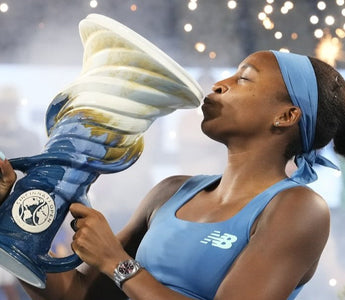
The 2026 US Open Series Explained (Canadian Open & Cincinnati)
Every August, two hard-court tournaments quietly sort out who is actually ready for New York, and the US Open Series 2026 delivered clearer signals than most. This breakdown covers what happened in Toronto and Cincinnati, what the withdrawal wave reshaped heading into Flushing Meadows, and which players left the hard-court swing looking genuinely dangerous. If you want to know who to watch and how to read the form yourself, this is where to start.
What the 2026 US Open Series actually is — and why it matters
Every August, the world’s best players converge on North America for a hard-court stretch that quietly decides a lot of what happens at Flushing Meadows. That stretch is the US Open Series 2026, and if you’re serious about tracking form before the Open, this is where your attention should be.
The Series runs through two of the biggest events on the calendar: the Canadian Open 2026, which rotates annually between Toronto and Montreal, and the Cincinnati Open 2026, officially the Western and Southern Open. On the men’s side, both are ATP Masters 1000 events — deep draws, full fields, real stakes. The women compete at the WTA 1000 level with the same weight attached. Nobody is coasting through these draws.
The ranking points and prize money matter, but they’re not the whole story. What the US Open Series really measures is timing. Who’s finding their serve on hard courts right now? Who’s moving through rounds without spending too much physical or mental currency? Who dropped a winnable match in the second round and might be carrying that into New York?
That’s the stuff that separates useful pre-tournament analysis from noise — match sharpness, confidence under pressure, and how a player’s body is holding up on a surface that punishes you if you’re even slightly off. If you want to get grounded on the bigger picture first, this rundown of top facts about the US Open is worth a few minutes before you go deeper.
Canadian Open 2026: the form swings that changed the conversation
The Canadian Open tends to tell you who is adjusting fastest to summer hard courts, and that made it one of the most useful checkpoints in the US Open Series 2026.
Because it lands early in the swing, the Canadian Open 2026 is less about full-season résumé and more about timing. Players are shifting out of clay patterns, reworking point construction, and trying to find that first-strike rhythm again. When someone looks sharp here, it usually means the hard-court habits are already in place.
The biggest form signals out of Canada were pretty clear:
Ben Shelton repeated as men’s champion, and that matters because it reinforces a style that travels well into New York. When his serve is landing and he is willing to play forward, he can shorten points, protect pressure moments, and make opponents feel rushed. That is a very real hard-court formula, especially heading into the final US Open 2026 warm-up tournaments.
Iga Świątek took the women’s title in Toronto, which felt like a strong timing win. More than anything, it suggested her hard-court movement and depth control were in sync early in the swing. That is the kind of sign you want before the schedule tightens.
The broader takeaway was about readiness. Canada rewarded players who looked settled in their patterns instead of those still searching for range, return position, or confidence off the first ball.
That is why this event matters so much in the bigger US Open Series 2026 schedule. It is not just a trophy stop before the Cincinnati Open 2026. It is an early read on who is clean through contact, who is serving with conviction, and who is making quick decisions on a fast court.
If you have been tracking player setups and style shifts from earlier in the season, the top contenders roundup from Roland Garros adds useful background.
Canada started the conversation. Cincinnati, as the next major hard-court test, gets the chance to confirm whether those Toronto and Montreal signals were the start of a run or just one good week.
Cincinnati 2026: who peaked at the right time
Cincinnati is usually the last and clearest hard-court read before Flushing Meadows, which is why this stop carried so much weight in the US Open Series 2026. It is close enough to New York that the biggest signals are less about raw results and more about the traits that travel: return pressure, confidence in tight sets, and the ability to close when the finish line is in sight.
Arthur Fils gave the strongest men’s signal by winning his maiden Masters 1000 title in Cincinnati. The big takeaway was how complete his week looked. He was making life difficult in return games, getting on top of rallies early, and handling pressure moments with a maturity that stands out this late in the summer. That combination matters at the US Open, where a few clean return games can flip an entire match.
Just as important, Fils arrived with extra momentum from his doubles summer sweep. That detail helps explain why his timing looked so sharp. Extra match play can sharpen reactions, improve feel in transition, and keep a player competing with confidence day after day. It does not guarantee a deep Slam run, but it is a useful clue that his rhythm on hard courts is in a very good place heading into New York.
XXX
On the women’s side, Coco Gauff beating Jessica Pegula was the result to circle. Pegula is one of the steadiest hard-court tests in the game, so that win said plenty about Gauff’s level. More specifically, it pointed to sharper returns, better timing from the backcourt, and the kind of competitive belief you want to see in one of the final US Open 2026 warm-up tournaments.
Cincinnati takeaways for New York:
- Fils’ maiden Masters 1000 title highlighted real progress in return games and closing ability
- His doubles summer sweep added another layer of rhythm and momentum
- Gauff’s win over Pegula suggested rising confidence and cleaner hard-court timing
- Cincinnati is one of the best final form checks before the US Open because it tests players under the same late-summer pressure window
What the withdrawal wave means for the draw at Flushing Meadows
Injury withdrawals and scheduling fatigue hit the 2026 US Open Series harder than most summers. High-profile names like Jannik Sinner, Novak Djokovic, Carlos Alcaraz, and Emma Raducanu all missed time at various points across Toronto and Cincinnati — and those absences do a lot more than disappoint fans. They fundamentally rewire the competitive landscape before a single ball is struck at Flushing Meadows.
Here’s what the withdrawal wave actually changes heading into the US Open:
- Seeding shifts move fast. When a top-five player skips one or both Series events, ranking points go undefended and the seeding order can look very different than anyone expected just weeks out.
- Bracket softening creates real opportunity. A draw missing two or three elite names opens doors for players ranked 20 through 50 who would otherwise face a brutal early-round path.
- Late additions change the texture of the draw. A field reshaped by withdrawals brings in fresh faces who may carry momentum or vulnerability in equal measure.
- Walkovers become more common. If you’ve noticed more walkovers cropping up across both hard-court warm-up weeks, that tracks. Condensed schedules and accumulated fatigue have made them a recurring feature this summer.
- Match reps become premium currency. Players who stayed healthy through the Canadian Open and Cincinnati Open arrive in New York with a sharpness no practice block can replicate.
Absences are frustrating, but they genuinely elevate the players who showed up and did the work. That’s what makes the US Open 2026 warm-up tournaments so valuable as a signal — they tell you who’s actually ready to go deep.
The players who look most dangerous in New York
Toronto and Cincinnati usually tell you who is trending the right way, and the US Open Series 2026 gave us a pretty clean shortlist of players who look built for New York.
Ben Shelton feels like the obvious men’s danger pick if his Cincinnati level carries over. When he is landing the first serve and owning the first forehand, points get short in a hurry. That matters even more at the US Open, where the crowd can turn one hot service game into real momentum. If his Cincinnati Open 2026 run showed improved discipline between big bursts, he becomes a nightmare early-round draw and a real second-week threat.
Arthur Fils looks like the new-blood contender nobody wants to see in the same section. His hard-court tennis during the Canadian Open 2026 and Cincinnati stretch showed why: he takes time away, drives the ball flat, and forces opponents to defend on their back foot. If he keeps that level, he has the kind of attack-first profile that can punch through a best-of-five bracket.
Coco Gauff may be the clearest women’s pick coming out of the US Open 2026 warm-up tournaments. What stands out is not just the athleticism. It is how well she adjusts when a match gets messy. If Toronto and Cincinnati showed her winning in more than one way, that is exactly the signal you want before Flushing Meadows.
Iga Świątek is still the steadier benchmark. Even if she did not own every headline during the ATP Masters 1000 2026 hard-court swing, deep runs in these events still matter because they show her floor remains incredibly high. She is still the player the rest of the draw has to solve.
The big takeaway from the US Open Series 2026 is simple: Shelton brings home-Slam electricity, Fils and Gauff bring fresh-contender upside, and Świątek still brings the most reliable week-to-week standard. If you want a gear-focused look at how top players are showing up in New York, the Tennis Express US Open men’s pro gear guide is a helpful next stop.
How to use the Series to gauge US Open favorites yourself
You don’t need a stats degree to read hard-court form heading into the US Open. A few sharp questions go a long way.
Start with recent wins, but dig one level deeper. Did the player actually beat top-ten opponents to claim that Canadian Open or Cincinnati title, or did they benefit from a soft draw shaped by withdrawals? A run built on walkovers tells a very different story than one forged through five straight top-tier matches.
Next, watch serving pressure. Hard courts reward big first serves and aggressive positioning, so check first-serve percentages and ace counts from both US Open Series 2026 warm-up stops. A player finding rhythm on serve in Toronto tends to carry that confidence straight into Flushing Meadows.
Return effectiveness matters just as much. Against the pace-heavy hitters you see all over hard courts, how quickly does a player neutralize that first ball? Short, clean return winners signal real readiness. Tentative chips signal the opposite.
Movement on pace is your final filter. Flat, fast hard courts expose footwork faster than any other surface. Watch whether a player is loading and driving through contact or getting caught flat-footed on wide balls. It’s a small detail that shows up in big moments.
Run through that checklist for two or three contenders and you’ll have a sharper read on the field than most pre-tournament takes. Want to take it further? Our US Open fan’s guide will help you turn these hard-court signals into a smarter watchlist before the Slam kicks off.


![You Got Served Unisex Tennis Tee White-Apparel-TENNIS EXPRESS-TESERVED18-1-1-[Sku]-Tennis Express](http://tennisexpress.com/cdn/shop/files/TESERVED18-1.webp?v=1769458091&width=298)

