


 Nike
Nike
 Adidas
 Asics
Asics
 K-Swiss
 New Balance
 On
On
 Wilson
 Babolat
 Head
Head
 Nike
Nike
 Wilson
 K-Swiss
 Babolat
 Nike
Nike
 Asics
Asics
 K-Swiss
 New Balance
 On
On
 Wilson
 Babolat
 Head
Head
 Lacoste
 Tecnifibre
 Wilson
 Penguin
 Boss
Boss
 Diadora
 Lucky in Love
 Lacoste
 Sofibella
 Lija
Lija
 On
On
 Bubble
 Boast
Boast
 Girl's Lucky in Love
 Fila
Fila
 Lacoste
 Tecnifibre
 Yonex
Yonex
 Dunlop
 Tecnifibre
 Solinco
 Mizuno
 Volkl
Volkl
 Mizuno Demos
 Volkl Demos
 Yonex Demos
 Volkl
Volkl
 Ame & Lulu
 CourtLife
 Dunlop
 Geau Sport
 Glove It
 Solinco
 Trelle and Co.
 Gamma
Gamma
 Penn
Penn
 Volkl
Volkl


 Adidas
 Dunlop
 Gamma
Gamma
 Head
Head
 Lucky in Love
 Tail
Tail
 Tennis Express
 Tourna
 Jannik Sinner
 Carlos Alcaraz
 Novak Djokovic
 Alexander Zverev
 Ben Shelton
 Daniil Medvedev
 Tommy Paul
 Casper Ruud
 Lorenzo Musetti
 Rafael Jodar
 Aryna Sabalenka
 Elena Rybakina
 Iga Swiatek
 Coco Gauff
 Jessica Pegula
 Mirra Andreeva
 Amanda Anisimova
 Alexandra Eala
 Elina Svitolina
 Victoria Mboko
 CRBN
CRBN
 RPM
RPM
 Engage
 Gearbox
 Holbrook
 Joola
Joola
 Paddletek
 Selkirk
 Franklin Sports
 Gamma
Gamma
 Nox
Nox
 Onix
Onix
 Selkirk
 Vulcan
 Acacia Sports
 Diadora
 Reebok
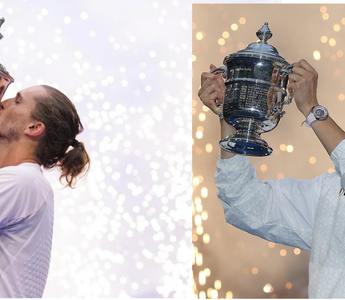
The 2026 US Open delivered exactly the kind of fortnight that reminds you why Flushing Meadows hits differently than every other Slam. This US Open 2026 recap breaks down how the titles were won, which draw disruptions changed the shape of both brackets, and what the results signal for the next swing on tour. From the tactical patterns that decided the finals to the breakout runs that no one saw coming, here is everything that mattered across two weeks in New York.
US Open 2026 recap: the champions and what made this year different
The US Open 2026 recap starts with the two results every fan wants first: Jannik Sinner won the men’s singles title, and Coco Gauff captured the women’s singles crown. Sinner’s run stood out for how he handled the biggest moments late in the tournament, absorbing pace, taking time away from opponents, and holding up in a demanding final. Gauff’s title felt just as significant. She came through a loaded draw, stayed composed in pressure games, and showed the improved point construction that has made her such a tough hard-court matchup.
Those US Open 2026 champions also helped define what made this year’s event feel different. The tournament had star power at the top, but the path to the trophies was anything but straightforward. Several seeded players were pushed early, momentum swung quickly across both draws, and the night sessions kept producing matches that changed the shape of the bracket.
That mix of expected contenders and real disruption gave the fortnight its edge. The US Open 2026 results were not just about who won. They were about how those wins were earned in tricky conditions, under New York pressure, against fields that never felt settled. In the sections ahead, we’ll break down the finals, the biggest upsets, and the US Open 2026 standout moments. If you want more background on the event itself, check out our top 10 facts about the US Open.
How the titles were won: the tactical patterns behind the final matches
In this US Open 2026 recap, the clearest pattern from both finals was not just who hit bigger. It was who won the first meaningful exchange in the point and who stayed composed when a game got to deuce or break point.
Men’s Final
Alexander Zverev won the men's title by keeping his service games airtight and refusing to give Shelton anything for free and, he faced only one break point in the entire match before Shelton finally converted late in the third set. Zverev leaned on a huge first serve and a backhand built to neutralize Shelton's forehand, using long, patient rallies to draw errors rather than chase winners. When the match reached its tightest stretch, a marathon 24-point rally that opened the fourth set, it was Zverev who came out ahead, breaking serve and never looking back.
Composure mattered as much as power. Shelton had one huge night behind him — a five-set escape against Carlos Alcaraz that didn't finish until 3:33 AM and looked a step slow in the biggest moments of the final. Zverev, by contrast, was the picture of control, racing out to a 5-0 lead in the second-set tiebreak before Shelton briefly rallied. A lot of the pressure points in this final came down to that kind of composure at deuce, where one strong first serve or one solid return can flip everything. If you want a quick refresher on that scoring dynamic, this guide to what advantage means in tennis is useful.
Women’s Final
Elena Rybakina's final was built on clean, low-error tennis and depth off the ground. She committed just three unforced errors and one double fault in the opening set alone, a stark contrast to a Sabalenka who couldn't find her timing. Rybakina's return game came up big at key moments too, converting a second break-point chance in the first set to seize control early.
The other swing factor was scoreboard management. Rybakina handled the biggest points with better discipline than Sabalenka, who piled up unforced errors trying to force the issue rather than letting rallies develop. That was the common thread across the US Open 2026 finals recap: Zverev controlled with serve-first efficiency, Rybakina with clean, patient ball-striking, and both champions were steadier when the match got tight.
The upsets and breakout runs that changed the draw
Few US Open recaps get to open with a line like this: the tournament's biggest shock came in the very first round. Novak Djokovic, chasing a 25th major, fell to Mariano Navone 7-6(5), 5-7, 4-6, 6-2, 6-1 in a four-hour-plus battle, ending a 78-match first-round winning streak at Grand Slams and marking his earliest exit from a major since 2006. By the semifinals, six of the men's top eight seeds were out of the draw entirely.
Carlos Alcaraz's exit carried its own weight. The defending champion looked sharp through the early rounds despite a long layoff, but ran into Ben Shelton's serve and raw power in a five-set quarterfinal, snapping an 18-match winning streak at majors and opening the door for an American finalist. On the women's side, unseeded qualifier Qinwen Zheng pulled off the tournament's biggest surprise, beating No. 8 seed Iga Swiatek 7-5, 6-3 to become the first qualifier to reach the US Open quarterfinals since Emma Raducanu in 2021.
That contrast defined the fortnight: chaos at the top of the men's draw against a women's field that, remarkably, saw all four top seeds reach the semifinals for the first time since 1975. Breakout runs like Zheng's and Karen Khachanov's surprise run to the men's semifinals (via a win over No. 3 seed Felix Auger-Aliassime) are the kind of results that reset expectations heading into the rest of the season. If you want a quick primer on what qualifies as an upset in tennis, that framework helps explain why this section of any US Open 2026 highlights package matters so much. The surprise results did more than shake the bracket — they changed the pressure points of the tournament.
Records, milestones, and memorable moments from the fortnight
What made this stretch of the US Open 2026 recap memorable was not just the list of winners, but how often the tournament forced a reset in expectations. The men's semifinal alone delivered two historic milestones: Ben Shelton and Frances Tiafoe's all-American matchup marked the first time two Black American men met in a Grand Slam semifinal in the Open era, and Shelton's run to the final made him the first Black American man to reach a US Open singles final since Arthur Ashe in 1972 — a nod to his father and coach, Bryan Shelton, who in 1991 became the first Black American man to win an ATP Tour title since Ashe.
Several of the tournament's most lasting moments came from second-week matches that felt like finals before the finals. Shelton's five-set escape against Alcaraz, which didn't end until 3:33 AM, was the latest conclusion in tournament history. Tiafoe's own run included a comeback from two sets down against Alex Michelsen. Those matches tested the eventual finalists before the title rounds and showed which players could hold shape under scoreboard stress — though the accumulated court time ultimately caught up with Shelton in the final.
Zverev's title run added its own set of milestones: it was his third consecutive Grand Slam final, tying him with Daniil Medvedev for the fourth-most major finals reached among active players, and made him the first German man in history to reach multiple US Open finals. For all that, the tournament's larger storyline stayed intact — an American man still hasn't won the US Open since Andy Roddick in 2003, now a 23-year wait.
So while the US Open 2026 highlights start with the champions, the full picture is bigger than the final scorelines. The surprise runs, the late-night crowd energy, and the tension of every round gave this event its identity. If you want more of that on-site atmosphere, the US Open from a fan's perspective is a great follow-up.
What the 2026 US Open says about the tour heading into the next swing
The 2026 US Open did more than crown two champions. It sent a clear signal about where professional tennis is heading as the hard court swing winds down and the calendar turns.
The aggressive baseline style that decided both finals wasn't a coincidence. All tournament long, players who could set the tone from the first ball and handle heavy, high-bouncing conditions under pressure consistently outlasted those leaning on defensive depth or serve-and-wait patterns. That trend is worth tracking as the tour moves into its next stretch.
For the champions, confidence will carry. Winning at Flushing Meadows is one of the hardest things in tennis, full stop, and players who reach that level here tend to carry genuine momentum forward. Expect both title holders to be dangerous in their next events, not just comfortable.
The breakout runs matter too. Several players who pushed deep into the second week now have ranking points, big-match experience, and something to prove. That combination tends to produce compelling tennis in the weeks that follow.
If this US Open 2026 recap leaves you with one takeaway, it's that aggressive, physical hard court tennis is shaping the game right now. The players leaning into that style are the ones to watch heading into the fall. And if it's got you thinking about your own game, there's no better time to browse Tennis Express's US Open tennis gear and make sure your kit is keeping up.


![You Got Served Unisex Tennis Tee White-Apparel-TENNIS EXPRESS-TESERVED18-1-1-[Sku]-Tennis Express](http://tennisexpress.com/cdn/shop/files/TESERVED18-1.webp?v=1769458091&width=298)

