


 Nike
Nike
 Adidas
 Asics
Asics
 K-Swiss
 New Balance
 On
On
 Wilson
 Babolat
 Head
Head
 Nike
Nike
 Wilson
 K-Swiss
 Babolat
 Nike
Nike
 Asics
Asics
 K-Swiss
 New Balance
 On
On
 Wilson
 Babolat
 Head
Head
 Lacoste
 Tecnifibre
 Wilson
 Penguin
 Boss
Boss
 Diadora
 Lucky in Love
 Lacoste
 Sofibella
 Lija
Lija
 On
On
 Bubble
 Boast
Boast
 Girl's Lucky in Love
 Fila
Fila
 Lacoste
 Tecnifibre
 Yonex
Yonex
 Dunlop
 Tecnifibre
 Solinco
 Mizuno
 Volkl
Volkl
 Mizuno Demos
 Volkl Demos
 Yonex Demos
 Babolat
 Volkl
Volkl
 Ame & Lulu
 CourtLife
 Dunlop
 Geau Sport
 Glove It
 Solinco
 Trelle and Co.
 Gamma
Gamma
 Penn
Penn
 Volkl
Volkl


 Adidas
 Dunlop
 Gamma
Gamma
 Head
Head
 Lucky in Love
 Tail
Tail
 Tennis Express
 Tourna
 Jannik Sinner
 Carlos Alcaraz
 Novak Djokovic
 Alexander Zverev
 Ben Shelton
 Daniil Medvedev
 Tommy Paul
 Casper Ruud
 Lorenzo Musetti
 Rafael Jodar
 Aryna Sabalenka
 Elena Rybakina
 Iga Swiatek
 Coco Gauff
 Jessica Pegula
 Mirra Andreeva
 Amanda Anisimova
 Alexandra Eala
 Elina Svitolina
 Victoria Mboko
 CRBN
CRBN
 RPM
RPM
 Engage
 Gearbox
 Holbrook
 Joola
Joola
 Paddletek
 Selkirk
 Franklin Sports
 Gamma
Gamma
 Nox
Nox
 Onix
Onix
 Selkirk
 Vulcan
 Acacia Sports
 Diadora
 Reebok
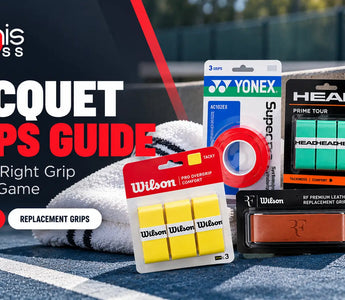
The grip is the only part of your racquet you touch on every shot, and it is also the easiest part of your setup to change. A fresh overgrip can stop a handle from slipping, bump up your grip size, or change how the whole frame feels in your hand, and it takes about two minutes to put on.
This guide covers the overgrips and replacement grips we recommend most often, sorted by how they feel. If you are new to grips, start with the basics below. If you already know you want something tacky or something that soaks up sweat, jump straight to that section.
In this guide
Overgrips vs. Replacement Grips
A replacement grip, sometimes called a base grip, is the thicker, cushioned wrap that comes on a new racquet. It sits directly on the handle, has an adhesive backing, and sets the shape of the bevels you feel in your palm. Most replacement grips measure somewhere between 1.4 and 1.9 millimeters thick.
An overgrip is a thin wrap, usually between about 0.4 and 0.7 millimeters, that goes on top of the replacement grip. It has no adhesive, so it comes off in seconds. Because the overgrip takes all the sweat and wear, most players change it far more often than the grip underneath.
Most competitive players use both: a replacement grip that sets the size and feel of the handle, with an overgrip on top that gets swapped out regularly.
Tacky vs. Absorbent
Tacky overgrips have a slightly sticky surface that holds your hand in place. They feel secure from the first wrap and suit players with dry or moderately sweaty hands, especially in cooler weather. Their weak spot is heavy sweat. Once a tacky grip gets saturated, it can turn slick.
Absorbent overgrips, often called dry grips, feel smooth and almost cloth-like when you first put them on. They pull moisture away from your palm, and many of them actually get grippier as they absorb sweat. They are the go-to choice for heavy sweaters and hot, humid courts. The tradeoff is durability, since dry grips tend to wear through faster.
In practice, feel runs along a spectrum rather than falling neatly into two boxes. Perforated versions of tacky grips, for example, keep most of their tack while handling sweat better than the originals.
Tacky
- Wilson Pro Overgrip
- Wilson Pro Overgrip Sensation
- Yonex Wet Super Grap
- Babolat Pro Tour 2.0
- HEAD Prime Tour
Tack plus absorption
- Wilson Pro Overgrip Perforated
- HEAD Prime Tour Perforated
- Babolat VS Original
Dry
- Wilson AbsorbX
- Volkl V-Dry
- Tourna Grip Original
- Tourna Tuff
Placement reflects how each grip feels in the hand when new, based on manufacturer descriptions and our own experience.
Best Tacky Overgrips
These grips have a sticky, secure feel right out of the package. They are the most popular overgrips on tour and at the club level, and they work best for players who do not sweat heavily.

Wilson Pro Overgrip
- Feel: Tacky
- Thickness: 0.6 mm
The Wilson Pro Overgrip is the grip most players measure every other overgrip against. It is made from thin, high-stretch felt with a soft surface and a moderate tack that feels secure without gluing your hand in place. It wraps smoothly, keeps playing well even as it gets dirty and comes in a wide range of colors and pack sizes, from three-packs up to bulk rolls.
If you have never picked a grip on purpose before, this is the one to start with. It gives you a baseline, and every other grip in this guide is easiest to understand in comparison to it.
Best for: Players who want a dependable tacky grip for everyday play.
Shop the Wilson Pro Overgrip
Wilson Pro Overgrip Sensation
- Feel: Tacky, thin
- Thickness: About 0.45 mm
The Pro Overgrip Sensation is a thinner version of the Wilson Pro Overgrip. Wilson says it is 25 percent thinner than the original. It keeps a moderate tack and some absorbency, but the real draw is feel. With less material between your hand and the handle, the bevels come through more clearly and your grip size barely changes.
If you like the Wilson Pro Overgrip but want a closer feel for the handle, this is the easy switch. The surface and tack will feel familiar, with less material between your hand and the racquet. Pulling it too tight can flatten out the tacky surface, so wrap it with a bit less tension than the standard Pro Overgrip.
Best for: Wilson Pro Overgrip fans who want a thinner wrap.
Shop the Wilson Pro Overgrip Sensation
Yonex Wet Super Grap
- Feel: Tacky
- Thickness: 0.6 mm
Wet Super Grap is the current name for the grip Yonex sold for years as Super Grap. The name changed, the grip did not. It has a noticeably stretchy, elastic feel with a tack that sits just a touch stickier than the Wilson Pro Overgrip, and plenty of players who try it never go back.
The tradeoff is that it tends to show dirt and lose its tack a little sooner than some rivals, so plan on changing it more often. It also handles light to moderate sweat well but can get slick for heavy sweaters in summer heat.
Best for: Players who like a stretchy, sticky wrap and don't sweat heavily.
Shop the Yonex Wet Super Grap
Babolat Pro Tour 2.0
- Feel: Tacky
- Thickness: 0.6 mm
Babolat reworked its Pro Tour overgrip into the Pro Tour 2.0 with a slightly stickier surface than the original. It uses a nonwoven rayon construction, and Babolat rates its absorption at 4 out of 5, which puts it among the better sweat-handlers in the tacky category.
It offers traction without feeling so sticky that grip changes between forehand and backhand feel sluggish. Players who find the Wilson Pro Overgrip gets slick too quickly in warm weather often land here.
Best for: Players who want tack but still need some help with sweat.
Shop the Babolat Pro Tour 2.0
HEAD Prime Tour
- Feel: Tacky
- Thickness: 0.6 mm
The Prime Tour builds on HEAD's popular Prime Pro overgrip with a tackier finish and better durability. A porous polyurethane top layer gives it grab, while a softer underlayer adds a bit of cushion. At 0.6 millimeters, it barely changes your grip size.
Its biggest selling point is how long the tack lasts. Many players find it stays grippy well past the point where other tacky overgrips start to feel worn out. Jannik Sinner and Alexander Zverev are among the HEAD players who endorse the Prime Tour.
Best for: Tacky-grip fans who want their overgrip to last longer between changes.
Shop the HEAD Prime TourBest Absorbent Overgrips
If your hands sweat heavily or you play in heat and humidity, an absorbent overgrip will keep the racquet in your hand far better than a tacky one. Most feel dry and smooth at first, then grip better as they take on moisture. The two perforated grips at the end of this section bridge the gap, keeping a tacky surface while handling sweat better than the originals.

Tourna Grip Original
- Feel: Dry
- Thickness: 0.44 mm
The light blue grip that does not slip has been the standard for absorbent overgrips for decades. Tourna Grip feels dry and a little papery in the hand, then gets tackier as it soaks up sweat, which is exactly the opposite of how a tacky grip behaves. On a humid summer afternoon, few grips hold up better.
Two things to know before you buy. The standard length covers roughly three-quarters of a handle, so most players with a two-handed backhand should go with the XL version, which wraps the full grip. And the surface can tear and discolor fairly quickly, so heavy sweaters often change it every match or two.
Best for: Heavy sweaters playing in heat and humidity.
Shop Tourna Grip XL
Tourna Tuff
- Feel: Dry
- Thickness: 0.66 mm
Tourna Tuff looks and feels like the original Tourna Grip but lasts much longer. Tourna spent years developing it specifically to fix the original's one real weakness: a surface that tears easily. The result keeps the same dry-then-tacky behavior with far more resistance to wear. It is also noticeably thicker, at 0.66 millimeters compared with 0.44 for the original, so expect your handle to feel slightly fuller.
For players who love Tourna Grip but go through packs of it every week in the summer, Tuff is the easy upgrade. We covered the development story in more detail in our post on how Tourna Tuff improves the durability of the original.
Best for: Tourna Grip fans who want fewer grip changes.
Shop Tourna Tuff
Wilson AbsorbX
- Feel: Dry
- Thickness: 0.55 mm
AbsorbX is Wilson's answer for extremely sweaty conditions. It has a fully dry feel with no tack, and Wilson built it to be more durable than most grips in this category.
Players who switch from Tourna Grip tend to notice two things: it lasts longer, and it feels a little thicker and more cushioned in the hand.
Best for: Sweaty-handed players who want durability and a little cushion.
Shop the Wilson AbsorbX
Volkl V-Dry
- Feel: Dry
- Thickness: 0.6 mm
The Volkl V-Dry pairs a technical surface finish with heavy-duty moisture absorption. It has a distinctly dry feel and is built for the toughest conditions, which makes it a good alternative for players who want Tourna-level sweat control but prefer a different texture.
Best for: Heavy sweaters who want an alternative to Tourna Grip.
Shop the Volkl V-Dry
Babolat VS Original
- Feel: Slight tack
- Thickness: 0.43 mm
At 0.43 millimeters, the VS Original is one of the thinnest overgrips on the market. That is the whole point. It adds almost nothing to your grip size, so you feel the bevels of the handle as clearly as you would with no overgrip at all. Babolat rates its absorption at 4 out of 5, and its smooth surface, with just a slight tack, makes grip changes easy.
The thin profile comes at a cost in durability, so expect to change it often. Babolat has long associated this grip with Rafael Nadal.
Best for: Players who want maximum handle feel with a light touch of tack.
Shop the Babolat VS Original
HEAD Prime Tour Perforated
- Feel: Tacky, perforated
- Thickness: 0.6 mm
This is the perforated version of the Prime Tour. The small holes across the surface give sweat somewhere to go, so the grip absorbs more moisture and dries faster while keeping the tacky feel that makes the Prime Tour popular.
It is a smart middle ground for players who love a sticky grip but find standard tacky overgrips turn slick by the second set.
Best for: Tacky-grip players who sweat more than they would like.
Shop the HEAD Prime Tour Perforated
Wilson Pro Overgrip Perforated
- Feel: Tacky, perforated
- Thickness: 0.6 mm
Same feel as the standard Wilson Pro Overgrip, with perforations that help it absorb sweat and dry out faster. Most players describe it as just as tacky as the original but noticeably drier in the hand once a match heats up.
If the Wilson Pro Overgrip is your grip nine months a year and you only struggle in the summer, this is the simplest fix. The feel stays familiar, and the slipping goes away.
Best for: Wilson Pro Overgrip fans who need more sweat control.
Shop the Wilson Pro Overgrip PerforatedMost Colorful Options
Most grips come in white or black and call it a day. A few let you match your racquet, your kit, or your mood. These are the overgrips with the widest color lineups.

Yonex Wet Super Grap
Wet Super Grap has one of the deepest color lineups of any overgrip. Beyond black and white, you can find shades like lime green, deep purple, wine red, and powder green, so matching almost any racquet is easy.
Shop Wet Super Grap Colors
HEAD Prime Tour
The Prime Tour pairs long-lasting tack with a strong color range, including mint, pink, blue and yellow alongside the usual neutrals. It is an easy way to add some personality to a HEAD frame.
Shop Prime Tour Colors
Wilson Pro Overgrip
The most popular overgrip around also comes in more than the classic white. Options like pink, yellow, green and grey let you keep the familiar Wilson Pro feel with a little more flair.
Shop Wilson Pro Overgrip ColorsBest All-Around Replacement Grips
A good replacement grip does a lot of quiet work. It sets your grip size, defines the bevels and absorbs some of the vibration that travels down the handle. These three offer a balance of tack, cushion and feel that suits most players, with or without an overgrip on top.

Babolat Syntec Pro
- Feel: Tacky
- Thickness: 1.9 mm
The Syntec Pro is Babolat's flagship replacement grip and the one that comes installed on many of its most popular frames, including Pure Aero and Pure Drive models. Babolat designed it to sit right between direct and cushioned, and its tacky surface gives good traction on its own. Babolat rates its absorption at 4 out of 5, one of the highest in its lineup.
If your Babolat racquet's stock grip has worn smooth, this is the like-for-like replacement. It is also a strong upgrade on any frame if you want a tacky base that still lets you feel the bevels.
Best for: Players who want a tacky, balanced base grip.
Shop the Babolat Syntec Pro
HEAD Hydrosorb Pro
- Feel: Tacky
- Thickness: 1.75 mm
The Hydrosorb Pro is a tightly contoured grip that hugs the sides of the handle for clear feedback. HEAD's twin-channel design combines two materials for cushion and airflow, a high-tack elastomer surface adds grab and perforations help it manage moisture.
It has a slightly softer, more cushioned feel than many replacement grips, so it is a good pick for players who play without an overgrip or want a bit of extra comfort underneath one.
Best for: Players who want tack with a little extra cushion.
Shop the HEAD Hydrosorb Pro
Wilson Pro Performance
- Feel: Tacky
- Thickness: 1.7 mm
Wilson's Pro Performance is thin and tacky, with a slightly softer feel for comfort. It sits between Wilson's Featherthin and its more cushioned grips, so it gives you a good read on the bevels without feeling hard.
It also has one of the easiest installs of any replacement grip. Wilson's Easy Wrap design adds a longer starting taper, a shaded upper edge that works as an overlap guide, and embossed cutting lines at the top, which makes a clean, even wrap much simpler for first-timers.
Best for: Players installing their own replacement grip for the first time.
Shop the Wilson Pro PerformanceBest Thin and Firm Replacement Grips
Thinner replacement grips do not have as much of a cushion feel. They are firmer and give more direct feedback that some players prefer. Leather grips allow players to feel the bevels of the handle, and some prefer that because it is easier for them to switch to the right grip when under pressure.
Pro Tip: Leather grips are substantially heavier than synthetic grips. They are used at times to add more weight to the handle of a racquet.

Wilson Featherthin
- Feel: Thin, synthetic
- Thickness: 1.4 mm
Featherthin is Wilson's thinnest synthetic replacement grip, and it is also one of the lightest. It gives you a sharper feel for the bevels than a standard replacement grip while keeping the comfort and easy wrapping of a synthetic material.
It will not drop your handle a full size on its own, but it can help if your grip feels just slightly too big with an overgrip on top.
Best for: Players who want a slimmer handle without switching to leather.
Shop the Wilson Featherthin
Wilson Leather Grip
- Feel: Firm, leather
- Thickness: 1.6 mm
Made from premium calfskin, Wilson's leather grip brings back the firm, old-school feel that dominated tennis for decades. The bevels feel sharp and defined, and the grip is thinner than most synthetic replacement grips. It comes with an adhesive backing for installation.
Leather offers very little cushion, so most players who use it put an overgrip on top. It is also extremely durable and will outlast just about any synthetic grip.
Best for: Advanced players who want precise bevels under an overgrip.
Shop the Wilson Leather Grip
Wilson Roger Federer Leather Grip
- Feel: Firm, leather
- Thickness: 1.6 mm
This is Wilson's signature leather grip for Roger Federer, with an RF logo on the surface and an adhesive backing. Like any good leather grip, it delivers a firm feel and clear definition on every bevel, and it is noticeably thinner than most synthetic replacement grips.
Federer is closely associated with the leather base and overgrip combination, and this grip is the most direct way to build that setup on your own racquet.
Best for: Players who want the classic leather feel with a signature touch.
Shop the Wilson RF Leather Grip
Babolat Natural Grip
- Feel: Firm, leather
- Thickness: 1.45 mm
Babolat's Natural Grip is made from 100 percent genuine leather, and at 1.45 millimeters, Babolat calls it the thinnest grip in its entire lineup. It has a dry feel and delivers about as direct a connection to the racquet as you can get.
It is also one of the easiest ways to reduce your grip size without resorting to shaving the handle, since swapping a standard 1.9-millimeter synthetic grip for this one takes real bulk off.
Best for: Players chasing maximum feel or a slightly smaller handle.
Shop the Babolat Natural GripHow to Choose the Right Grip
Start with how much you sweat
This is the single biggest factor. If your hands stay fairly dry, a tacky overgrip will feel great and last a while. If your hands get wet by the middle of the first set, go absorbent. If you fall somewhere in between, a perforated tacky grip like the Wilson Pro Overgrip Perforated or HEAD Prime Tour Perforated is a good place to start.
Think about the season
A grip that works perfectly in March can fail you in July. Many players keep two types in the bag: a tacky overgrip for cooler months and indoor play, and a dry grip for summer heat and humidity.
Decide how much feel you want
Thinner, firmer grips give you more feedback and sharper bevels, which helps with quick grip changes and precise racquet-face control. Thicker, cushioned grips absorb more vibration and feel more comfortable over long sessions. If you deal with arm or wrist soreness, lean toward a cushioned replacement grip.
Not sure? Start with more cushion. If you can't decide, begin with one of the all-around replacement grips rather than a thin or leather option. Cushioned grips are more forgiving on your hand and arm, and they feel familiar since most new racquets come with one installed. Once you have played with it for a while, you will have a better sense of how much feedback you want. If the answer is more, moving to a thinner grip is an easy switch.
Factor in grip size
Racquet grip sizes step up in 1/8-inch increments. A single overgrip adds roughly 1/16 inch, or about half a size, so it is an easy way to fine-tune a handle that feels slightly small. Going the other direction, a thinner replacement grip is the best way to shrink a handle that feels too big. For more detail, see our guide on what to do if your tennis grip is too big or too small.
How Often Should You Change Your Grip?
Change your overgrip when it looks shiny or dirty, feels slick, has lost its tack or has started to tear. For players who hit a few times a week, that usually means every week or two. Heavy sweaters and players using dry grips like Tourna Grip may need a fresh one every match.
Replacement grips last much longer, especially under an overgrip. Swap yours when it feels compressed and flat, when the bevels start to feel soft and rounded or when the surface has gone smooth. A fresh replacement grip can make an older racquet feel close to new.
Friendly reminder: Be aware that if you throw or toss your racquet around the court, the grip will get damaged and torn up. We won't tell anyone about that third-set meltdown, but your overgrip will.
Quick Installation Tips
When you put on an overgrip, remove the old one first rather than stacking a new one on top, unless you are adding layers on purpose to build up grip size. Start at the butt cap, keep your tension steady and overlap each wrap by about the same amount so the handle stays even. Most players wrap in the traditional direction, though some left-handed players reverse it so the overlapping edges sit differently under their palm.
For a replacement grip, peel off the old grip and remove any leftover adhesive before you start. Look for lead tape or a heat-shrink sleeve under the old grip, and leave it in place unless you mean to change your racquet's weight or balance.
Every Grip Compared
| Grip | Feel | Thickness | Best for |
|---|---|---|---|
| Tacky overgrips | |||
| Wilson Pro Overgrip | Tacky | 0.6 mm | Everyday tacky feel |
| Wilson Pro Overgrip Sensation | Tacky, thin | About 0.45 mm | Wilson Pro feel, thinner |
| Yonex Wet Super Grap | Tacky | 0.6 mm | Stretchy, sticky wrap |
| Babolat Pro Tour 2.0 | Tacky | 0.6 mm | Tack with some sweat help |
| HEAD Prime Tour | Tacky | 0.6 mm | Long-lasting tack |
| Absorbent overgrips | |||
| Tourna Grip Original | Dry | 0.44 mm | Heavy sweat, humidity |
| Tourna Tuff | Dry | 0.66 mm | Tourna feel, more durable |
| Wilson AbsorbX | Dry | 0.55 mm | Durability and cushion |
| Volkl V-Dry | Dry | 0.6 mm | Tourna alternative |
| Babolat VS Original | Slight tack | 0.43 mm | Maximum handle feel |
| HEAD Prime Tour Perforated | Tacky, perforated | 0.6 mm | Tacky fans who sweat |
| Wilson Pro Overgrip Perforated | Tacky, perforated | 0.6 mm | Wilson Pro feel, more absorption |
| All-around replacement grips | |||
| Babolat Syntec Pro | Tacky | 1.9 mm | Balanced tacky base |
| HEAD Hydrosorb Pro | Tacky | 1.75 mm | Tack with extra cushion |
| Wilson Pro Performance | Tacky | 1.7 mm | Easy first install |
| Thin and firm replacement grips | |||
| Wilson Featherthin | Thin, synthetic | 1.4 mm | Slimmer handle, synthetic feel |
| Wilson Leather Grip | Firm, leather | 1.6 mm | Precise bevels under an overgrip |
| Wilson RF Leather Grip | Firm, leather | 1.6 mm | Classic leather, signature look |
| Babolat Natural Grip | Firm, leather | 1.45 mm | Maximum feel, smaller handle |
Tennis Grip FAQ
What is the difference between an overgrip and a replacement grip?
A replacement grip is the thicker, cushioned base wrap that sits directly on the racquet handle and has an adhesive backing. An overgrip is a thin, nonadhesive wrap that goes over the replacement grip and gets changed much more often.
Should I use a tacky or an absorbent overgrip?
Go tacky if your hands stay fairly dry or you mostly play in cool weather. Go absorbent if your hands sweat heavily or you play in heat and humidity. Perforated tacky grips are a good compromise if you fall in between.
What is the best overgrip for sweaty hands?
Tourna Grip Original is the classic choice, since it gets tackier as it absorbs sweat. Tourna Tuff offers the same feel with better durability, and Wilson AbsorbX and Volkl V-Dry are strong alternatives.
How often should I change my overgrip?
Change it once it looks dirty, feels slick or starts to tear. For players who hit a few times a week, that is usually every week or two. Heavy sweaters may need a new one every match.
Does an overgrip change my grip size?
Yes, slightly. One overgrip adds roughly 1/16 inch, or about half a grip size. Thinner overgrips like the Babolat VS Original and Wilson Pro Overgrip Sensation add less, and thicker ones like Tourna Tuff add a bit more.
Do left-handed players wrap their grips differently?
Some do. A few left-handed players wrap their grips in the opposite direction, so the overlapping edges run the other way under their palm. Most wrap it the traditional way, the same as right-handed players. Neither approach is wrong, and it comes down to personal preference.
Why do so many advanced players use leather grips?
Leather is firm and thin, so it keeps the bevels of the handle sharp and gives precise feedback on where the racquet face is. Most players put an overgrip on top for tack or sweat absorption, since leather offers very little cushion on its own.


![You Got Served Unisex Tennis Tee White-Apparel-TENNIS EXPRESS-TESERVED18-1-1-[Sku]-Tennis Express](http://tennisexpress.com/cdn/shop/files/TESERVED18-1.webp?v=1769458091&width=298)

