


 Nike
 Adidas
 Asics
 K-Swiss
 New Balance
 On
 Wilson
 Babolat
 Diadora
 Head
 Mizuno
 Nike
 Wilson
 Diadora
 K-Swiss
 Babolat
 Nike
 Asics
 K-Swiss
 New Balance
 On
 Wilson
 Babolat
 Head
 Lacoste
 Tecnifibre
 Wilson
 Penguin
 Boss
 Boast
 Lucky in Love
 Lacoste
 Sofibella
 Lija
 On
 Bubble
 Girl's Lucky in Love
 Lacoste
 Tennis Express
 Yonex
 Dunlop
 Tecnifibre
 Solinco
 Mizuno
 Volkl
 Mizuno Demos
 Tecnifibre Demos
 Volkl Demos
 Yonex Demos
 Babolat
 Volkl
 Ame & Lulu
 CourtLife
 Dunlop
 Geau Sport
 Solinco
 Trelle and Co.
 Gamma
 Penn
 Volkl


 Adidas
 Dunlop
 Gamma
 Head
 Lucky in Love
 Tail
 Tennis Express
 Tourna
 Jannik Sinner
 Carlos Alcaraz
 Novak Djokovic
 Alexander Zverev
 Ben Shelton
 Daniil Medvedev
 Tommy Paul
 Casper Ruud
 Lorenzo Musetti
 Rafael Jodar
 Aryna Sabalenka
 Elena Rybakina
 Iga Swiatek
 Coco Gauff
 Jessica Pegula
 Mirra Andreeva
 Amanda Anisimova
 Alexandra Eala
 Elina Svitolina
 Victoria Mboko
 CRBN
 RPM
 Engage
 Gearbox
 Holbrook
 Joola
 Paddletek
 Selkirk
 Franklin Sports
 Gamma
 Nox
 Onix
 Selkirk
 Vulcan
 Acacia Sports
 Reebok
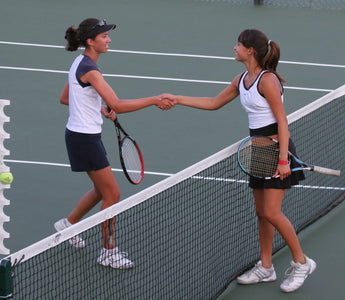
Proper tennis etiquette forms the foundation of this timeless sport, distinguishing tennis from other athletic competitions through its emphasis on sportsmanship, respect, and honor. Tennis places unique responsibility for fair play directly on each player, making understanding these unwritten rules essential for recreational and competitive players alike. This guide will go over essential tennis court etiquette, guidelines by United States Tennis Association (USTA) and the International Tennis Federation (ITF), and uncouth behavior players and spectators should avoid.
Court Behavior and Basic Conduct

Court etiquette may seem old-fashioned and dated, but it is the easiest way to keep court matches running smoothly, as well as encourage good sportsmanship and rapport among players. Court etiquette also prevents miscommunication, which can quickly lead to conflict escalation. These are some rules you should abide by when you step onto a tennis court.
- Turn off or silence your phone. A phone ringing is more than just a rude annoyance; it's a liability. If your phone rings during a match, your opponent can argue it is an intentional hindrance and claim a point. Make sure you don't give your opponent any reason to get the upper hand because of your phone.
- Be punctual. Arriving on time and prepared demonstrates respect for opponents and court time. A rule of thumb is to arrive 10 to 15 minutes early. Always introduce yourself before matches and shake hands afterward, regardless of outcome.
- When crossing courts, timing is critical. Never walk behind active courts during points; wait for natural breaks or changeovers. Walk across the fewest courts possible to reach your destination, minimizing disruptions to ongoing matches.
- Observe specific dress codes. Professional tennis organizations and some clubs enforce a dress code, so make sure you wear the appropriate attire. Wimbledon in particular is famous for requiring that all tennis players dress completely in white. Otherwise, players are free to choose their personal apparel.
- Keep your temper. Emotional control defines the character of tennis. Maintain dignity by avoiding racquet throwing, excessive celebration of lucky shots, or heated arguments. Do not scream abuse or try to intimidate opponents. Unsportsmanlike conduct can warrant code violations, which can in turn lead to disqualifications or even tournament bans if they're severe enough.
- Avoid distracting your opponent. Likewise, avoid distracting your opponent by making unnecessary movements or conversation. In doubles, partners may communicate only when balls travel toward their side of the court. Reserve lengthy discussions for changeovers or post-match conversations.
Line Calling and Scoring Integrity

Most tennis matches worldwide are played without officials, which means players themselves are responsible for the line calls. So it behooves players on both sides of the net to act fairly and generously when it comes to line calling and scoring.
- "When in doubt, call it in." This golden rule of tennis etiquette requires giving opponents the benefit of the doubt on close calls. Players call lines on their own side of the court where they have the best vantage point. A ball touching any part of the line is good; for a ball to be considered out, there must be a space between its landing point and the line. Uncertain balls are considered good ones.
- Accuracy, not advantage, drives proper line calling. ATP and WTA conduct codes stress that players must make calls immediately and audibly. If you clearly see your shot land out, call it against yourself. This honesty builds mutual respect and maintains the sport's integrity.
- Announce scores before each point. According to the USTA's fair play guidelines, players should announce scores clearly before each serve and wait until opponents are ready before serving. The receiving player must be ready within reasonable time limits. Doing so prevents disputes and establishes the game's rhythm.
- Warm-up serves both players, not personal practice. These are part of the official rules of both the USTA and the ITF. Five-minute warm-ups should help players prepare by hitting balls directly to them at a reasonable pace. Avoid attempting winners or practicing difficult shots during this cooperative period.
- Catch balls during warm-up serves. During serve practice, generally catch balls rather than returning them aggressively. This courtesy allows servers to maintain rhythm without chasing returns, as well as avoid needlessly antagonizing your opponent. At worst, you may even hit your opponent if you catch them off-guard.
- Don't interrupt other courts to retrieve a ball. If your ball rolls onto the other court, don't immediately run after it. Wait until the neighboring players finish their point before asking for the ball or retrieving it.
- Raise a hand to your opponent when a net cord happens. A net cord is when the ball touches the top of the net and lands on the opponent's side. This is perfectly legal and you'd still get the point, but it is tradition to raise a hand to your opponent in apology for the lucky and accidental win.
Equipment Care and Court Maintenance
Court maintenance responsibilities extend to all players, especially for public courts. Professional club guidelines require sweeping courts after use and returning equipment to proper storage.
- Protect gear. Avoid tossing or throwing equipment, especially racquets. Keep balls dry in pockets or bags, as moisture constitutes equipment tampering under official rules. Keep water bottles and towels off the playing surface.
- Wear non-marking tennis shoes. Amateur or recreational players tend to wear running or cross-training shoes that leave scuff marks on hard courts. It's not just inconsiderate; running shoes are also ill-equipped to endure hard courts for long, having softer outsoles and not handling swift lateral movements well. We offer plenty of non-marking tennis shoes designed specifically for the demands of hard tennis courts.
- Bring proper equipment & clean up after matches. Personal preparation demonstrates respect for facilities and fellow players. This includes your racquet, grips and overgrips, balls, hats or visors, and water bottles. You should also make sure to pick up and dispose of your trash, such as empty ball cans, water bottles, overgrip plastic, etc.


Spectator Etiquette
It's not just players who should observe etiquette. Tennis tradition demands certain behavior from spectators during active points. In order to participate properly, it's important that you do the following:
- Be quiet. Unlike other sports, spectators must remain silent from the first serve until the point is completed. Applaud only after points conclude, never during double faults or errors. This creates the sport's distinctive tense and hushed atmosphere. This tradition is practiced more in the breach than the observance, but don't be surprised if your fellow audience members ask you to quiet down.
- Get up from your seat only at certain intervals. Professional tennis matches have players rotate ends at the end of the first, third, and every odd game. These are the acceptable times to leave your seat. The two exceptions include after the first game in a set or the first point in a set where players merely switch sides and don't take a break.
- Make sure your phone is on silent. You should not take any calls during a match. Taking photos and videos during a match is acceptable so long as you don't use flash photography; even then, keep your camera on silent mode so you don't distract the players.
- Refrain from taunting. Unlike sports like baseball or football, taunting and other abusive behavior towards players is frowned upon in tennis. Heckling is also a sure-fire way of getting you thrown out of the court.
- Don't coach or get involved in the match. Some parents of junior tennis player tend to give unsolicited advice or coaching. Be mindful not the disturb the players; let your son or daughter make their own calls and handle disagreements. Going over proper tennis etiquette with your child is highly recommended.

Quick Reference: Tennis Etiquette Dos and Don'ts
DO:
- Call balls on your side promptly and honestly
- Remove hats when shaking hands at the net
- Apologize for net shots and hitting opponents
- Acknowledge opponent's great shots
- Keep score audibly before serving
DON'T:
- Walk behind courts during points
- Take calls on your phone
- Return warm-up serves aggressively
- Celebrate opponent's errors
- Coach from the sidelines during matches
- Leave the courts without cleaning up
Embrace Tennis Court Courtesy
Tennis etiquette transcends mere rule-following; it embodies respect for opponents, officials, and the sport's noble traditions. These guidelines and unspoken rules ensure positive experiences for all participants and spectators, as well as preserve tennis's unique character in modern sports culture. By following proper court etiquette, you'd be doing your part in practicing good sportsmanship and fair play.
Get Legit with Tennis Express
Tennis Express offers official merchandise and tournament-approved apparel and gear, as well as court equipment for coaches and organizers. You can find quality apparel and gear from our store that will ensure your match days go without a hitch.
Shop Tennis Express


