


 Nike
 Adidas
 Asics
 K-Swiss
 New Balance
 On
 Wilson
 Babolat
 Diadora
 Head
 Mizuno
 Nike
 Wilson
 Diadora
 K-Swiss
 Babolat
 Nike
 Asics
 K-Swiss
 New Balance
 On
 Wilson
 Babolat
 Head
 Lacoste
 Tecnifibre
 Wilson
 Penguin
 Boss
 Lucky in Love
 Lacoste
 Sofibella
 Lija
 On
 Bubble
 Boast
 Girl's Lucky in Love
 Lacoste
 Tennis Express
 Yonex
 Dunlop
 Tecnifibre
 Solinco
 Mizuno
 Volkl
 Mizuno Demos
 Tecnifibre Demos
 Volkl Demos
 Yonex Demos
 Babolat
 Volkl
 Ame & Lulu
 CourtLife
 Dunlop
 Geau Sport
 Glove It
 Solinco
 Trelle and Co.
 Gamma
 Penn
 Volkl


 Adidas
 Dunlop
 Gamma
 Head
 Lucky in Love
 Tail
 Tennis Express
 Tourna
 Jannik Sinner
 Carlos Alcaraz
 Novak Djokovic
 Alexander Zverev
 Ben Shelton
 Daniil Medvedev
 Tommy Paul
 Casper Ruud
 Lorenzo Musetti
 Rafael Jodar
 Aryna Sabalenka
 Elena Rybakina
 Iga Swiatek
 Coco Gauff
 Jessica Pegula
 Mirra Andreeva
 Amanda Anisimova
 Alexandra Eala
 Elina Svitolina
 Victoria Mboko
 CRBN
 RPM
 Engage
 Gearbox
 Holbrook
 Joola
 Paddletek
 Selkirk
 Franklin Sports
 Gamma
 Nox
 Onix
 Selkirk
 Vulcan
 Acacia Sports
 Reebok
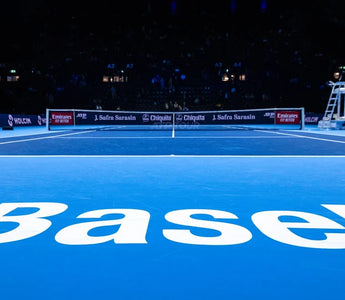
Swiss Indoors Basel 2026 arrives at one of the most consequential stretches of the ATP calendar, where a single week on fast indoor courts can shake up year-end standings and punch a ticket to Turin. This preview breaks down why the St. Jakobshalle surface matters, which players are built to do damage here, and how the draw and schedule could play out before Paris comes calling. Whether you are tracking rankings, picking your Swiss Indoors Basel 2026 players to watch, or just want the sharpest read on the field, this is where to start.
Swiss Indoors Basel 2026 Preview: Why This ATP 500 Matters
Every October, the tour moves indoors, and Basel lands right in the thick of it. The Swiss Indoors Basel 2026 isn't a tune-up: it's an ATP 500 event with genuine ranking weight, a strong field, and the timing to flip the year-end standings in a matter of days.
The venue sets the tone. St. Jakobshalle runs fast. The indoor hard courts produce a low bounce and quick ball speed that compress points and put a premium on free points off the serve. If you hold serve comfortably and win the short exchange, you're built for this place. If your game depends on heavy topspin and grinding out long rallies, the surface is working against you before you even step on court.
That's not a minor detail: it shapes everything. It influences how coaches structure a game plan, how the Swiss Indoors Basel 2026 draw plays out round by round, and which seedings end up looking shakier than they appeared on paper. Big servers move up the sheet here. Returners who read first serves well become legitimate weapons. And anyone arriving from an extended outdoor stretch needs to recalibrate in a hurry.
Before the main draw tips off, a few things are worth watching. Early rounds on fast indoor courts produce upsets more often than the seedings suggest, so track the Swiss Indoors Basel 2026 schedule closely from day one. Also pay attention to which top names committed early versus which ones waited on fitness. Late entries and protected ranking wildcards can quietly reshape a bracket.
For more context on the team events running alongside the individual tour this fall, our breakdown of everything you need to know about the 2025 Laver Cup is a solid read before Basel week begins.
Top Seeds, Withdrawals, and Wildcards Shaping the 2026 Draw
The Swiss Indoors Basel 2026 draw will likely be shaped by three things readers should track once the field is official: the top seeds, any late withdrawals, and the wildcard spots.
- Top seeds set the tone: In any ATP 500, the highest-ranked entrants usually define the bracket from the start. Once the Swiss Indoors Basel 2026 players list is confirmed, look at where the top two or four seeds land. That tells you a lot about possible semifinal paths, but it also highlights danger spots for anyone stuck with a loaded section featuring big servers, aggressive returners, or indoor specialists.
- Withdrawals can open the bracket: Late in the season, schedule management matters. Players sometimes pull out before the tournament starts, and that can change the balance of a quarter in a hurry. If a withdrawal happens after the draw is made, it may result in a walkover, which sends the opponent through without playing. For fans following Swiss Indoors Basel 2026, that is worth watching because one unexpected change can turn a tough section into a much cleaner route.
- Wildcards matter more than they look: Wildcards are not just filler. A local player or a young hitter with upside can make life awkward in round one, especially indoors where quick points and first-strike tennis keep matches close. In Basel, that makes wildcard announcements one of the more useful details to track alongside the seedings.
As the Swiss Indoors Basel 2026 schedule and entry list become official, this is the practical way to read the bracket: find the seeds, note the replacements, and circle the wildcard matchups that could produce an early surprise.
Why Basel’s Fast Indoor Courts Change the Matchups
The St. Jakobshalle plays noticeably faster than most stops on the indoor swing. The hard court surface produces a low, skidding bounce that compresses rally time and punishes passive play. If you're breaking down the Swiss Indoors Basel 2026 draw, understanding how the court plays is genuinely step one.
Some styles are just built for conditions like these. Players who tend to thrive at Basel include:
- Flat groundstroke hitters who can drive through the short bounce before opponents have time to reset
- Big servers who pocket free points and control the point on the second shot
- Serve-and-volleyers who use the surface pace and tight indoor angles to cut off replies
- Aggressive returners who step inside the baseline early and take time away from their opponents
The same conditions that reward aggression can expose real weaknesses, though. Players who often struggle here include:
- Heavy topspin baseliners whose looping shots lose bite on a low-bouncing surface
- High kick-serve specialists who rely on that bounce to set up their patterns; indoors, the kick flattens out and sits up invitingly
- Defensive counterpunchers who need extra time to work the point and rarely get it
Surface speed shapes equipment choices more than most fans realize, too. If you're curious how different court types affect footwear and traction, our breakdown of types of tennis courts and their shoes is worth a read.
Bottom line: knowing this surface profile gives you a real edge when reading the Swiss Indoors Basel 2026 draw. Before a ball is struck, you can already spot which matchups figure to be tighter than the rankings suggest.
Players to Watch in Swiss Indoors Basel 2026
Here is the practical watch list for Swiss Indoors Basel 2026 before the field is locked in.
- Jannik Sinner: Sinner remains one of the tour’s most reliable hard-court performers, and his Basel résumé already shows he is comfortable here; the quick indoor bounce rewards his clean contact, backhand pace, and ability to take time away early in rallies.
- Carlos Alcaraz: Alcaraz brings high-end form and has already shown he can problem-solve in Basel, even though this event does not naturally favor his heavier spin as much as some outdoor stops; his return game, change of direction, and burst forward still make him dangerous under a roof.
- Alexander Zverev: Zverev is a proven indoor threat late in the season, and his history in Basel-style conditions makes him a serious name to track; the first serve, deep backhand, and low-risk court positioning play well on a fast court that rewards first-strike tennis.
- Ugo Humbert: Humbert usually looks at home indoors, and while his Basel history is lighter than some of the top seeds, his lefty serve and flat backhand are exactly the kind of tools that can turn the Swiss Indoors Basel 2026 draw upside down.
- Holger Rune: Rune can be streaky from week to week, and he does not bring the deepest Basel track record, but his willingness to step inside the baseline, redirect pace, and finish at net gives him real upside in these quicker conditions.
- Stan Wawrinka: Wawrinka is the clearest Swiss storyline because he knows this event, has years of Basel experience, and still has the shot weight to rush opponents indoors; just as important, the St. Jakobshalle crowd can give him and the rest of the Swiss contingent a real lift in tight sets.
That local angle matters. Beyond Wawrinka, any Swiss player who gets into the main field, takes a wildcard, or comes through qualifying can feel that home support immediately once the Swiss Indoors Basel 2026 schedule and first-round matchups are out. If you want a wider look at players trending in the right direction before big events, our players to follow guide is a useful next read.
How Basel Fits Into the Paris Masters and ATP Finals Race
By the time Swiss Indoors Basel 2026 wraps up, the ATP season is down to its last major checkpoints: Paris and the ATP Finals in Turin. That is why Basel matters beyond one trophy. It is one of the last chances for players to add a big chunk of points, sharpen their indoor hard-court form, and improve their position before the year-end sprint.
As an ATP 500, Basel offers real leverage in the standings. The champion earns 500 points, the finalist gets 300, and a semifinal run still moves the needle. For players hovering around the cut line for Turin, that can be the difference between qualifying and missing out. Even for guys who have already put themselves in strong position, a deep week in Basel can help with seeding and confidence heading into bigger matches.
The timing is a big part of the story too. Basel usually falls right around the final lead-in to Paris, so the Swiss Indoors Basel 2026 draw will be worth watching closely. A player who strings together four or five strong matches indoors can show up in Paris with rhythm and belief. On the flip side, a heavy week can also test legs, recovery, and decision-making late in the season. That balance matters, especially on quick courts where sharp serving and first-strike tennis tend to decide matches fast.
Paris brings 1000 points to the winner, so Basel often works like an early read on who is built for this stretch. Watch for the players serving efficiently, taking the ball early, and staying calm in tight breakers. Those are usually the signs that form can carry over.
If you want more off-court inspiration for the late-season swing, check out our take on tennis fashions on a path to Paris. And if Basel has you thinking about your own indoor setup, take the next step with Fall Tennis Essentials 2026 for layers, shoes, and gear that make sense for faster fall conditions.
Frequently Asked Questions
What is Swiss indoors Basel?
Swiss Indoors Basel is an ATP 500 indoor hard-court tournament played each October in Basel at St. Jakobshalle. It matters because the fast, low-bouncing conditions reward first-strike tennis, and its late-season timing can significantly affect both the Paris Masters lead-in and the ATP Finals race.
Who are the players participating in the Swiss Indoors Basel?
The field to watch includes Jannik Sinner, Carlos Alcaraz, Alexander Zverev, Ugo Humbert, Holger Rune, and Stan Wawrinka. The final lineup can still shift based on official entries, withdrawals, wildcards, and any Swiss players who earn a main-draw spot or come through qualifying.


