Nike
 Adidas
 Asics
 K-Swiss
 New Balance
 On
 Wilson
 Babolat
 Diadora
 Head
 Mizuno
 Nike
 Wilson
 Diadora
 K-Swiss
 Babolat
 Nike
 Asics
 K-Swiss
 New Balance
 On
 Wilson
 Babolat
 Head
 Lacoste
 Tecnifibre
 Wilson
 Penguin
 Boss
 Boast
 Lucky in Love
 Lacoste
 Sofibella
 Lija
 On
 Bubble
 Girl's Lucky in Love
 Lacoste
 Tennis Express

 Yonex
 Dunlop
 Tecnifibre
 Solinco
 Mizuno
 Volkl
 Mizuno Demos
 Tecnifibre Demos
 Volkl Demos
 Yonex Demos
 Babolat
 Volkl
 Ame & Lulu
 CourtLife
 Dunlop
 Geau Sport
 Glove It
 Solinco
 Trelle and Co.
 Gamma
 Penn
 Volkl


 Adidas
 Dunlop
 Gamma
 Head
 Lucky in Love
 Tail
 Tennis Express
 Tourna
 Jannik Sinner
 Carlos Alcaraz
 Novak Djokovic
 Alexander Zverev
 Ben Shelton
 Daniil Medvedev
 Tommy Paul
 Casper Ruud
 Lorenzo Musetti
 Rafael Jodar
 Aryna Sabalenka
 Elena Rybakina
 Iga Swiatek
 Coco Gauff
 Jessica Pegula
 Mirra Andreeva
 Amanda Anisimova
 Alexandra Eala
 Elina Svitolina
 Victoria Mboko
 CRBN
 RPM
 Engage
 Gearbox
 Holbrook
 Joola
 Paddletek
 Selkirk
 Franklin Sports
 Gamma
 Nox
 Onix
 Selkirk
 Vulcan
 Acacia Sports
 Reebok
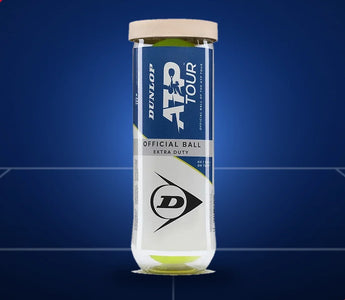
Whether you've always wondered why tennis balls are pressurized or just noticed your balls going flat faster than expected, the answer comes down to some pretty straightforward physics and a can that does more work than most players realize. This article breaks down how pressurized cans keep balls match-ready, what happens to bounce and feel once that seal is broken, and how pressurized balls stack up against pressureless options. You'll also find practical storage tips and answers to common questions about re-pressurizing balls and whether old cans are still worth opening.
Why are tennis balls sold in pressurized cans?
Crack open a fresh can of tennis balls and you already know what you're getting: that satisfying hiss, followed by balls that bounce crisply and feel alive off the strings. That experience is no accident. It's the whole point of the pressurized can.
Here's the basic physics. A regulation tennis ball is manufactured with compressed air sealed inside — typically around 14 psi above atmospheric pressure. That internal pressure is what gives the ball its firm feel, responsive bounce, and consistent speed off the court. The catch is that rubber isn't perfectly airtight. Even sitting untouched on a shelf, a ball slowly bleeds pressure through the rubber walls over time.
This is exactly why tennis balls go flat, and why the can exists in the first place. It's pressurized to match the internal pressure of the balls, which stops that slow leak before you ever pick up a racket. Think of it like vacuum-sealing food: you're not just protecting it from getting knocked around in transit, you're preserving what's actually inside.
So when players ask why tennis balls are pressurized, the short answer is: because the ball's performance depends on it. The can isn't just packaging. It's a pressure chamber built to keep each ball in match-ready condition from the factory floor to your first serve.
Once the seal breaks, the clock starts ticking. But before we get into what happens after that first hiss, it's worth knowing that not every tennis ball works this way. And if you're simply ready to stock up on a fresh set right now, browse Tennis Express's selection of tennis balls in single cans and you'll be set before your next match.
What happens after you open the can: why tennis balls go flat
The moment you pop open a fresh can, that familiar hiss tells you the protected environment is gone. From there, the balls start to lose pressure over time. That’s a big part of why tennis balls are pressurized and why tennis balls are sold in pressurized cans in the first place: the can helps preserve that fresh, lively feel until you’re ready to play.
Once the seal is broken, the change is gradual, but most players can feel it pretty quickly. As pressure drops, a ball usually starts to:
- Bounce a little lower and feel less lively
- Feel softer when you squeeze it
- Come off the strings less consistently
- Sound duller at contact instead of crisp
- Lose some of that quick, skidding response after the bounce
In everyday play, this is what people mean when they say tennis balls go flat. It’s not usually an all-at-once thing. One session they feel great, then a few hits later they seem a little dead, especially if you’re used to a fresh can.
It also surprises a lot of players that balls can lose their pop even when they’re not being used. Time matters once the can is open, and storage conditions can make the process move faster. Heat, humidity, and leaving balls loose in your bag or car won’t help, but even in decent conditions, opened pressurized balls won’t stay fresh forever.
If you play often and get tired of cycling through new cans, pressureless tennis balls are worth considering. They don’t depend on internal air pressure the same way, so they tend to stay more consistent over a longer stretch. They’re not everybody’s first choice for match play, but for practice, ball machines, and frequent hitters, they can be a smart option.
Pressurized vs. pressureless tennis balls: what’s actually different?
If you’re wondering why are tennis balls pressurized, the easiest way to understand it is to compare them with pressureless balls. They may look almost identical in the basket, but they do not play the same, wear the same, or make sense for the same kind of court time.
| Category | Pressurized | Pressureless |
|---|---|---|
| Durability | Felt holds up well, but internal pressure drops over time | Core stays firm longer, though felt can fuzz up and wear faster |
| Feel & Bounce | Crisp, lively, more match-ready response | Slightly firmer or heavier feel, more stable over time |
| Best Use Case | Matches, league play, social hits, regular club sessions | Ball machines, teaching carts, drilling, high-volume practice |
| Lifespan | Usually 1 to 4 weeks of regular play | Often several months, depending on surface and use |
Here’s what that means once you step on court:
- Pressurized balls feel better right away. They come out of the can with that lively pop most players expect. That fresh, clean response is a big part of why pressurized balls are the standard for match play.
- They do not stay fresh forever. Once the seal is broken, the ball starts losing internal pressure. So if you have ever asked, “Do tennis balls lose pressure over time?” the answer is yes, even when they are just sitting in your bag.
- That is why tennis balls go flat. The gas inside the core slowly escapes through the rubber. Over time, the bounce drops, the feel gets duller, and the ball starts to seem heavier off the strings.
- Pressureless balls are built differently. Their bounce comes more from the rubber structure than from trapped internal pressure. That is why they stay playable much longer and why they are so common in practice settings.
- The trade-off is feel. Many players think pressureless balls feel a bit harder or less lively at first. For point play, that matters. For repetitive drills, it usually matters a lot less.
So which type should you buy? If you want the best feel for matches and regular hitting, pressurized balls are usually the better pick. If you spend hours feeding a machine, coaching, or running drills every week, pressureless balls often give you better value. If you want a deeper breakdown, check out our guide to choosing the right tennis balls for your game.
How to store tennis balls so they last longer
Good storage won’t stop pressure loss forever, but it can help your balls stay playable longer. If you’ve wondered why are tennis balls pressurized, it’s because that internal pressure helps create the bounce and response players expect. Once the can is opened, that advantage starts fading.
Here’s how to slow it down:
- Keep the can sealed until you’re ready to use it. An unopened can helps preserve the ball’s intended feel and bounce. Break the seal, and the pressure-loss countdown begins.
- Use a pressurized ball saver after opening. A storage tube or ball saver can help reduce pressure loss between hits, especially if you don’t finish a can in one session.
- Don’t leave balls in a hot car. Heat speeds up pressure loss and can age the rubber faster. A summer trunk is one of the quickest ways to make fresh balls feel flat.
- Avoid very cold storage. Cold temperatures make the gas inside the ball contract, so the ball will bounce lower and feel less lively until it warms up.
- Store them indoors at room temperature. A stable environment is best for both the rubber core and the felt.
- Use older cans first. If you keep extras at home, rotate your stock so nothing sits sealed longer than it has to.
Cold weather and altitude both change how a tennis ball performs, so storage is only part of the picture. If you play at elevation, Tennis Express’s high-altitude tennis ball collection is a smart place to start. And if you’re playing in colder temps, check Tennis Express’s cold-weather tennis guidance as well, since low temperatures can affect bounce and feel even before the ball starts to go flat.
These habits won’t change why tennis balls are in pressurized cans, but they will help you get more consistent sessions out of every can you open.
Quick FAQ: can you re-pressurize tennis balls, and do old cans still work?
Here are answers to the questions we hear most often.
Can you re-pressurize tennis balls? Technically, yes. Devices like the Pressureball or Tourna Restore use a pressurized canister to push air back into the ball over several days. Results vary, but players generally notice the biggest improvement with balls that have only slightly lost their bounce. Severely dead balls are a tougher case. It's a solid option for extending the life of a nearly-fresh set, just don't expect miracles from balls that have been sitting out for weeks.
Does an old, unopened can still work? Usually. A factory-sealed can in good condition holds its internal pressure well for two years or more. The rubber core does lose a little elasticity over time, but if the seal is intact and you still get that satisfying hiss when you crack it open, the balls inside should play close to new.
How do you know when a can or set of balls is past its prime? No hiss on opening is the first red flag. From there, trust your hands and eyes: balls that feel hollow when you squeeze them, bounce noticeably low, or have a chalky, heavily worn felt have had their day. When it's time for a fresh set, browse our full selection of tennis balls and find the right match for how you play.
Frequently Asked Questions
Can tennis balls be pressurized?
Yes. Standard tennis balls are made with compressed air sealed inside, and they’re sold in pressurized cans to help preserve that internal pressure until you open them. After opening, they gradually lose pressure, and some re-pressurizing devices can restore a bit of bounce, especially if the balls are only slightly flat.
Why put tennis balls in the refrigerator?
You generally shouldn’t. Very cold storage makes the gas inside the ball contract, so the ball will bounce lower and feel less lively until it warms back up. For better consistency, store tennis balls indoors at room temperature and avoid both hot cars and very cold conditions.