


 Nike
 Adidas
 Asics
 K-Swiss
 New Balance
 On
 Wilson
 Babolat
 Diadora
 Head
 Mizuno
 Nike
 Wilson
 Diadora
 K-Swiss
 Babolat
 Nike
 Asics
 K-Swiss
 New Balance
 On
 Wilson
 Babolat
 Head
 Lacoste
 Tecnifibre
 Wilson
 Penguin
 Boss
 Lucky in Love
 Lacoste
 Sofibella
 Lija
 On
 Bubble
 Boast
 Girl's Lucky in Love
 Lacoste
 Tennis Express
 Yonex
 Dunlop
 Tecnifibre
 Solinco
 Mizuno
 Volkl
 Mizuno Demos
 Tecnifibre Demos
 Volkl Demos
 Yonex Demos
 Babolat
 Volkl
 Ame & Lulu
 CourtLife
 Dunlop
 Geau Sport
 Glove It
 Solinco
 Trelle and Co.
 Gamma
 Penn
 Volkl


 Adidas
 Dunlop
 Gamma
 Head
 Lucky in Love
 Tail
 Tennis Express
 Tourna
 Jannik Sinner
 Carlos Alcaraz
 Novak Djokovic
 Alexander Zverev
 Ben Shelton
 Daniil Medvedev
 Tommy Paul
 Casper Ruud
 Lorenzo Musetti
 Rafael Jodar
 Aryna Sabalenka
 Elena Rybakina
 Iga Swiatek
 Coco Gauff
 Jessica Pegula
 Mirra Andreeva
 Amanda Anisimova
 Alexandra Eala
 Elina Svitolina
 Victoria Mboko
 CRBN
 RPM
 Engage
 Gearbox
 Holbrook
 Joola
 Paddletek
 Selkirk
 Franklin Sports
 Gamma
 Nox
 Onix
 Selkirk
 Vulcan
 Acacia Sports
 Reebok
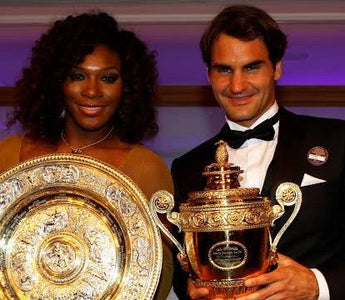
Few debates in sports carry as much weight or as much genuine nuance as the one over the best tennis players of all time. This guide breaks down the criteria that actually matter, walks through the men's and women's legends who belong in the conversation, and gives you the era context you need to make sense of it all. Whether you're settling a locker room argument or just deepening your love of the game, there's something here worth thinking about.
What makes a tennis player the GOAT? The criteria that actually matter
Ranking the best tennis players of all time is one of sport's great ongoing debates, and honestly, that's part of what makes it so compelling. There's no single right answer, but there are real, meaningful criteria you can use to make fair comparisons across eras and genders.
Grand Slam titles are the most obvious starting point. These four majors, the Australian Open, French Open, Wimbledon, and US Open, represent the sport's highest stage. If you want a quick primer, check out what a Grand Slam in tennis actually means before diving deeper. That said, Slam counts alone don't tell the full story.
Weeks ranked No. 1 matter just as much. Reaching the top spot is brutally difficult, and staying there is even harder. Research published in SpringerOpen tracked top-ranked professional tennis players' ranking positions in the previous three years using data from official stakeholder websites, compared across men and women, and found that reaching No. 1 typically demands years of sustained elite-level performance, not just a few breakthrough wins.
Head-to-head records carry real weight too. So does surface versatility, since winning on clay, grass, and hard courts each requires a genuinely different game. Performance under pressure, depth of competition faced, and sheer longevity round out the picture. Competing at the highest level for a decade or more is its own kind of greatness.
Era context ties it all together. Equipment, court speeds, and tour structures have shifted dramatically over time. Keeping that bigger picture in mind is what separates a thoughtful GOAT argument from a simple stats comparison.
The best men's tennis players of all time: who belongs in the conversation
The men's side of the best tennis players of all time debate isn't built on vibes — it's built on numbers. Grand Slam titles, weeks at No. 1, head-to-head records, surface versatility: the metrics are real, and they consistently point to the same three names. Novak Djokovic, Rafael Nadal, and Roger Federer have defined this conversation for two decades, and each makes a genuinely strong case.
Djokovic's is arguably the hardest to argue against on paper. He holds 24 Grand Slam singles titles — the most in men's history — and his 428 weeks ranked No. 1 isn't just a record, it's a landmark. He's also the only man to have won each Major multiple times, which says everything about his consistency across surfaces and conditions.
Nadal's case starts on clay and doesn't really need to go much further. Fourteen Roland Garros titles is a career achievement that most players couldn't build in a lifetime, but the fact that he also won Slams on hard courts and grass shows his game was never limited to one surface.
Federer's peak — roughly 2004 to 2008 — still looks like some of the most complete tennis ever played. Twenty Slams, effortless movement, a shot repertoire that coaching academies still study. His influence on the next generation of players is as much a part of his legacy as the trophies.
When analysts compare these players, they typically weigh:
- Grand Slam titles
- Weeks ranked No. 1
- Year-end No. 1 finishes
- Head-to-head results among top rivals
- Career win percentage
- Surface versatility
Where someone lands in this debate often comes down to which of those criteria they value most. There's no universally wrong answer. If you want to follow the players carrying this legacy forward, explore our full roster of men's pro players at Tennis Express.
The best women's tennis players of all time: the legends who set the standard
Dominance in women's tennis has never looked just one way. Slam counts matter, but so does era-defining consistency, versatility across surfaces, and the kind of cultural impact that genuinely grows the game. Several players have built an undeniable case for the GOAT title, and the honest answer is that more than one of them deserves a seat at that table.
Serena Williams won 23 Grand Slam singles titles, the most in the Open Era, across four different decades. Her combination of power, athleticism, and mental toughness didn't just set a standard — it redefined what dominance looks like at the professional level.
Steffi Graf holds 22 Grand Slam titles and remains the only player in history, men's or women's, to win the Golden Slam: all four Majors plus Olympic gold in a single calendar year. A decade of that kind of consistency is almost impossible to comprehend.
Martina Navratilova won 18 Grand Slam singles titles with an all-court game that was genuinely ahead of its time. Her serve-and-volley approach and commitment to fitness changed how players trained and competed for years after.
Chris Evert also won 18 Slams and reached at least the semifinals of 34 consecutive Grand Slams. Her baseline precision and mental composure made her one of the most reliable champions the sport has ever produced.
Margaret Court holds the all-time record with 24 Grand Slam singles titles spanning both the amateur and Open eras, numbers that are impossible to ignore in any serious era comparison.
Billie Jean King won 12 Grand Slam singles titles and remains one of the most consequential figures in tennis history, both on and off the court.
The women's GOAT debate is every bit as layered and compelling as the men's, with legitimate cases spread across eras and playing styles. To see the players carrying this legacy forward, browse today's women's professional players and see who's writing the next chapter.
Why era matters: comparing champions across different tennis generations
Ranking the best tennis players of all time gets tricky fast once you compare champions from completely different tennis generations. A major won in 1965 did not come through the same conditions as one won in 2015, so raw totals only tell part of the story.
A fair GOAT debate should account for a few big era factors:
- Draw sizes and qualification: Earlier majors often had smaller, less standardized fields.
- Equipment: Wood rackets and gut strings produced a very different game than today's graphite frames and polyester setups.
- Training and sports science: Modern players benefit from better fitness programs, recovery tools, nutrition, injury prevention, and year-round support teams.
- Surface mix: Grass, clay, hard courts, and even court speed have shifted over time, which changes what styles win most.
- Professionalism: Before the Open Era began in 1968, many top pros were not eligible to play the majors.
- Tour depth: The sport is now more global, which means tougher competition from the first round on.
- Travel and scheduling: Today's calendar demands constant international travel and almost nonstop physical maintenance.
That does not make older tennis legends lesser, or modern stars automatically better. It just means context matters. If you want to judge the greatest tennis players of all time fairly, compare how dominant they were against the conditions of their own era. For more background, check out the fascinating history of tennis.
How to use the GOAT debate to appreciate the game like a player
The GOAT debate has no final answer, and honestly, that's what makes it worth having. Engaging with it seriously — weighing Grand Slam counts against consistency, peak dominance against longevity, physical gifts against mental toughness — teaches you to watch tennis with a sharper eye.
When you start asking why Federer's one-handed backhand held up under pressure, or how Serena reinvented her game after injuries that would have ended most careers, you stop watching scores and start watching tennis. You notice footwork, shot selection, how a player manages a third-set tiebreak when everything is on the line. That kind of awareness is something you can actually take onto the court with you.
The greatest tennis players of all time each solved the game differently. Navratilova with aggression at the net. Djokovic with his return and sheer resilience. Graf with footwork and a forehand that controlled every rally from the first ball. No single template for greatness exists, which means there's no single way to appreciate it.
Follow the players who fascinate you, study what made them elite, and let that curiosity sharpen your own game. The best tennis players of all time spent careers refining every detail — and if you want to bring that same mindset to your own sessions, the right accessories are a solid place to start.
Frequently Asked Questions
Who are the top 5 best tennis players?
There is no single official top five, but a strong all-time shortlist from the GOAT conversation includes Novak Djokovic, Rafael Nadal, Roger Federer, Serena Williams, and Steffi Graf. That group stands out for Grand Slam success, time at No. 1, longevity, and winning across different surfaces and eras.
Who are the big 3 in tennis?
The Big 3 in tennis are Novak Djokovic, Rafael Nadal, and Roger Federer. They have defined the men's GOAT debate for roughly two decades, with unmatched résumés built on Grand Slam titles, weeks at No. 1, surface versatility, and elite head-to-head battles against one another.
Is Novak Djokovic considered the best tennis player of all time?
Yes, many analysts consider Novak Djokovic the best men's tennis player of all time based on the numbers. He owns a record 24 men's Grand Slam singles titles, a record 428 weeks at No. 1, and he is the only man to win each Major multiple times.


