


 Nike
Nike
 Adidas
 Asics
Asics
 K-Swiss
 New Balance
 On
On
 Wilson
 Babolat
 Head
Head
 Nike
Nike
 Wilson
 K-Swiss
 Babolat
 Nike
Nike
 Asics
Asics
 K-Swiss
 New Balance
 On
On
 Wilson
 Babolat
 Head
Head
 Lacoste
 Tecnifibre
 Wilson
 Penguin
 Boss
Boss
 Diadora
 Lucky in Love
 Lacoste
 Sofibella
 Lija
Lija
 On
On
 Bubble
 Boast
Boast
 Girl's Lucky in Love
 Fila
Fila
 Lacoste
 Tecnifibre
 Yonex
Yonex
 Dunlop
 Tecnifibre
 Solinco
 Mizuno
 Volkl
Volkl
 Mizuno Demos
 Volkl Demos
 Yonex Demos
 Babolat
 Volkl
Volkl
 Ame & Lulu
 CourtLife
 Dunlop
 Geau Sport
 Glove It
 Solinco
 Trelle and Co.
 Gamma
Gamma
 Penn
Penn
 Volkl
Volkl


 Adidas
 Dunlop
 Gamma
Gamma
 Head
Head
 Lucky in Love
 Tail
Tail
 Tennis Express
 Tourna
 Jannik Sinner
 Carlos Alcaraz
 Novak Djokovic
 Alexander Zverev
 Ben Shelton
 Daniil Medvedev
 Tommy Paul
 Casper Ruud
 Lorenzo Musetti
 Rafael Jodar
 Aryna Sabalenka
 Elena Rybakina
 Iga Swiatek
 Coco Gauff
 Jessica Pegula
 Mirra Andreeva
 Amanda Anisimova
 Alexandra Eala
 Elina Svitolina
 Victoria Mboko
 CRBN
CRBN
 RPM
RPM
 Engage
 Gearbox
 Holbrook
 Joola
Joola
 Paddletek
 Selkirk
 Franklin Sports
 Gamma
Gamma
 Nox
Nox
 Onix
Onix
 Selkirk
 Vulcan
 Acacia Sports
 Diadora
 Reebok
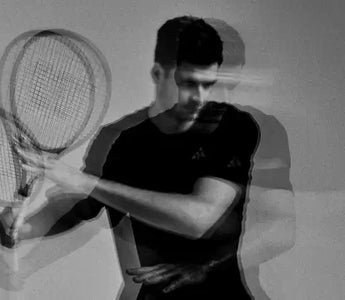
The Tennis Racquet Buying Guide
Every spec decoded. No jargon, no guesswork. Come back to this page every time you shop.
🔖 Bookmark This PageHead Size
Head size is the surface area of the string bed, measured in square inches. It is usually the first spec listed on any racquet page, and for good reason: it shapes how forgiving the racquet is on every single shot you hit.
A bigger head means a bigger sweet spot. Miss the center slightly and the ball still goes where you want it. A smaller head rewards clean contact with a crisper, more precise feel, but mishits will let you know about it. There is no right answer here, only the right answer for your game.
| Category | Range | Best For |
|---|---|---|
| Midsize | 85–94 sq. in. | Advanced players chasing precision and feel; compact backswings |
| Mid-Plus | 95–104 sq. in. | The sweet spot for most players; control and forgiveness in one package |
| Oversize | 105–115 sq. in. | Beginners, casual players, and anyone coming back from time off |
| Super Oversize | 116+ sq. in. | Maximum forgiveness; popular with players managing arm or shoulder issues |
Weight

To things to keep in mind with weight: strung and unstrung. Always go by strung weight. That is what you are actually swinging. Strings add roughly 15–20 grams, so if a product page only lists the unstrung spec, do the math before comparing frames.
Heavier racquets push through the ball with more authority. They absorb vibration better, too, which is why players dealing with elbow or arm pain often find them more comfortable to play with over a long match.
Lighter racquets move faster, which pays off on serves, quick exchanges, and anything at the net. The flip side: they can feel unstable when a heavy ball comes back at you, and they tend to transmit more shock to the arm.
| Category | Strung Weight | Feel on Court |
|---|---|---|
| Light | Below 10.5 oz. / 298 g | Quick and easy to swing; less plow-through on heavy incoming shots |
| Medium | 10.5–11.5 oz. / 298–326 g | Where most players land; good mix of speed and stability |
| Heavy | Above 11.5 oz. / 326 g | Punches through the ball; more demanding on the body over time |
Balance Point
Balance point tells you where the weight lives along the racquet's length, measured in millimeters from the butt cap to the midpoint. A racquet balanced exactly at its center is "even." Above that midpoint is "head heavy." Below it is "head light."
Head Light
More mass in the handle, less in the hoop. The racquet feels quicker through the swing and easier to redirect. This is the standard for advanced and professional players who generate their own power and want the frame to get out of the way. Most heavier racquets (11+ oz.) are head light to keep the swing weight manageable.
Head Heavy
More mass in the hoop, less in the handle. The extra weight at the tip does some of the power work for you, which is why head-heavy frames show up most often in lighter racquets aimed at players with shorter or more compact swings. Think about a hammer; almost all the weight is in the head.
Even Balance
Weight splits toward the center. Some players find this the most natural feeling, especially at the net and on serve. It is less common at the extremes of the market but shows up often in mid-range tweener frames. Most tweener frames are slightly head light, giving them a nice tandem of mobility and stability.
Swing Weight
Swing weight measures how heavy a racquet feels when you are actually swinging it. Two racquets can weigh the same on a scale and feel completely different in motion because of where that weight sits.
It is measured in kg·cm² on a machine. A higher number means more effort to accelerate the racquet, but also more stability and plow-through at contact. A lower number means the frame whips through faster, which works well for players with quick, compact strokes or anyone who spends a lot of time at the net.
| Swing Weight Range | What to Expect |
|---|---|
| Below 310 | Very maneuverable; great for fast swings and compact technique |
| 310–330 | Versatile range; Flatter hitters might prefer the higher 330 |
| 330–350 | Powerful and planted; you need a full swing to get the most out of it. Elite Players Only |
| Above 350 | A lot of mass in motion; best suited to long, loopy groundstrokes. (Only for the Tennis Gods) |
Beam Width

Beam width is how thick the frame is, measured in millimeters at the widest point. A thicker beam is generally stiffer, so more energy gets returned to the ball at impact. A thinner beam offers more flex, soaking up some of that energy and giving the player a softer, more controlled feel.
Thin Beam (18–20 mm)
This is the territory of player's frames and control racquets. The flex gives you excellent feel and honest feedback on every shot. Power comes from your swing, not the frame. If you watch the pros, most of them are playing in this range.
Medium Beam (21–24 mm)
The middle ground, which is exactly where tweener racquets live. You get some help on off-center hits without giving up all the feel that thinner frames offer. A good starting point for intermediate players.
Wide Beam (25+ mm)
Stiffer and more powerful by design. A wider beam does more of the work on shots where your swing speed is not doing the heavy lifting. The trade-off is a firmer feel at contact, which is worth keeping in mind if your arm has ever given you trouble.
String Pattern
String pattern is the number of vertical strings (mains) and horizontal strings (crosses) in the string bed. You will see it written as 16x19 or 18x20. First number is always the mains, second is always the crosses.
Open Patterns (16x19, 16x18)
Fewer strings, more space between them. At contact, the strings move more and snap back with a sharp bite on the ball. This is where topspin comes from. Open patterns also give the ball more time on the string bed, which produces a livelier response. The one catch: strings take on more stress with each hit, so they break faster.
Dense Patterns (18x20)
More strings, less movement at impact. The shot comes off flatter, the feel is firmer, and the strings last longer before needing to be replaced. Players who love precision, slice, and clean flat groundstrokes often gravitate toward this pattern. Less spin, more control.
Stiffness (RA Rating)
Stiffness is measured on the RDC machine and expressed as an RA rating. Higher number means stiffer frame. It is one of the most important specs to understand, especially for players who have dealt with arm pain.
A stiffer frame sends more energy back into the ball, so you get more power with less swing. A flexible frame absorbs more of that energy, returning a softer feel at contact and putting less stress on your wrist, elbow, and shoulder in the process.
| RA Rating | Classification | Player Fit |
|---|---|---|
| Below 60 | Very Flexible | Best for players with arm issues; prioritizes comfort and feel |
| 60–64 | Flexible | Control-oriented; comfortable for most adults, including those with mild arm sensitivity |
| 65–69 | Medium | Tweener territory; solid blend of feel and some frame assist |
| 70–74 | Firm | Power assist on tap; juniors and higher swing speeds tend to handle this range well |
| 75+ | Very Firm | Maximum power output; not recommended for anyone with arm discomfort |
Grip Size
Grip size is the circumference of the handle, measured in inches. In the U.S., racquets come in sizes 4 through 45/8, labeled L0 through L5 depending on the brand. Get this right and your hand stays relaxed through contact. Get it wrong and you will be gripping tighter than you should, which leads to fatigue and, over time, arm issues.
| Size | Circumference | Best For | Common? |
|---|---|---|---|
| L0 | 4 in. | Youth players; very small hands | |
| L1 | 4⅛ in. | Small adult hands | |
| L2 | 4¼ in. | Most common for women | Popular |
| L3 | 4⅜ in. | Most common for men | Popular |
| L4 | 4½ in. | Larger adult hands | |
| L5 | 4⅝ in. | Largest standard size; less common |
Finding Your Size
Hold the racquet in an Eastern forehand grip. Slide your index finger of your opposite hand into the gap between your palm and your fingertips. No room at all means the grip is too small. More than one finger's width of space means it is too large. One finger fitting snugly is the right fit.
Racquet Length
Standard adult length is 27 inches, and the vast majority of racquets on the market are exactly that. Extended frames run up to 29 inches and add a bit of leverage on serves and groundstrokes, at the cost of some adjustment time. On the junior side, racquets scale down from 17 inches based on a child's height and age, so there is a right size for every stage of the game.
Junior Racquet Lengths
| Length | Approximate Age | Approximate Player Height |
|---|---|---|
| 17 in. | Ages 3–4 | Under 39 in. |
| 19 in. | Ages 4–5 | 40–44 in. |
| 21 in. | Ages 5–6 | 45–49 in. |
| 23 in. | Ages 6–8 | 50–54 in. |
| 25 in. | Ages 8–10 | 55–59 in. |
| 26 in. | Ages 10–12 | Transitional size before moving to a full adult frame |
Adult Racquet Lengths
| Length | Common Use |
|---|---|
| 27 in. | Standard length; where almost every adult racquet lands |
| 27.5–29 in. | Extended length; adds reach and serve leverage with some adjustment to groundstroke timing. Extra length also raises swing weight, so even a lighter frame will feel heavier in motion. |
How to Put It All Together
You now know more about racquet specs than most players ever will. Here is how to turn that into an actual decision.
Start With Your Game, Not the Spec Sheet
Before you look at a single racquet, get honest about where you are as a player. How long have you been playing? Big swing or compact stroke? Any arm issues? Competitive league player or weekend warrior? Answering these questions will immediately cut the market in half and point you toward the right neighborhood of frames.
Pick Two or Three Specs to Lead With
You do not need a perfect score on every spec. Find the two or three that matter most for your situation and let those drive your shortlist. Arm health is your priority? Start with RA rating and weight. Chasing more topspin? Lead with string pattern and head size. Coming back after years away? Head size and weight will tell you the most.
Demo It First
A racquet that looks great on paper can feel wrong the moment you actually swing it. We offer a racquet demo program for exactly this reason. Take a frame out for a full session, not just a quick warmup, before you commit. Your arm knows things a spec sheet cannot tell you.
String It Properly Before You Judge It
Factory strings are a placeholder. They are not meant to represent how a racquet actually plays. If you are testing a new frame, get it strung with something that matches your normal setup before you draw any conclusions. A great racquet with bad strings will always lose to a good racquet strung well.
Give It a Real Chance
Switching racquets shakes up your muscle memory, and the first session with a new frame almost never tells the full story. Give it three to five sessions before you decide. The exception: if something feels actively wrong, like jarring impact shock, arm pain, or a balance that throws off your timing, trust that signal and move on.
Ready to Find Your Racquet?
Our staff includes USRSA Certified Stringers who have played and tested hundreds of frames. We are happy to help you narrow it down before you buy.
Shop Tennis Racquets at Tennis Express


![You Got Served Unisex Tennis Tee White-Apparel-TENNIS EXPRESS-TESERVED18-1-1-[Sku]-Tennis Express](http://tennisexpress.com/cdn/shop/files/TESERVED18-1.webp?v=1769458091&width=298)

